

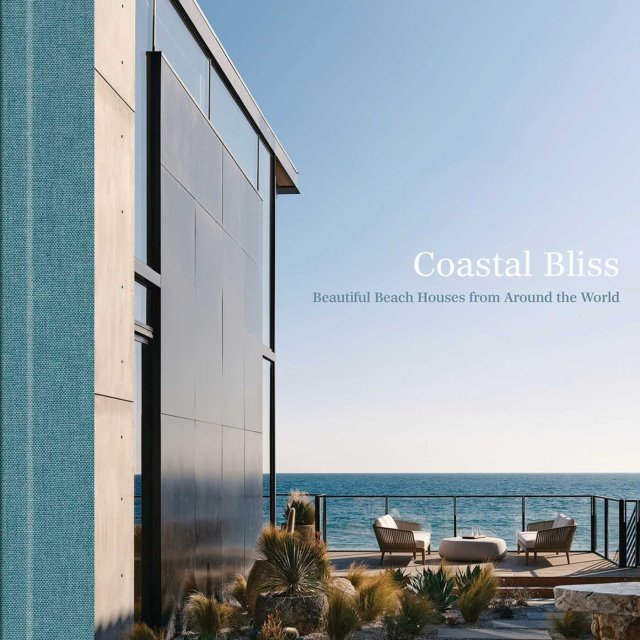
Featuring a number of outstanding projects, by some of our favourite architects, it is an honour to be both featured and asked to write the introduction.
https://imagespublishing.com/uk/book/coastal-bliss/datasheet/
When an architect is asked to design in a coastal environment,
it carries special responsibility. They’re championing the
surroundings in a way that is often completely different to
how one approaches designing in a city. Urban homes will
often turn their back on the concrete environment they’re
inserted into, while coastal homes open their arms to the
nature they’re surrounded by.
These homes have the ability to change your state of mind,
in ways that are probably more obvious than an urban
dwelling—great design can help you achieve bliss, as can an
amazing environment.
These are homes you can comfortably walk around in barefoot.
You feel the relaxed nature of them in a similar way to
how you feel the sand between your toes on the beach.
The interior palettes you’ll see in these special homes predominantly
feature a lot of timber and stone, firmly grounding
the buildings with nature. Timber and stone inside the homes,
and outside as well. It’s often a more organic architecture—
less shiny, less polished. The hero is outside the windows, not
inside, and that’s where the designers want the focus of the
occupants to be.
They’re often a conscious uncoupling from technology—
the exact opposite to a typical office building. I know some
architects who refuse to install dishwashers, so the inhabitants
are forced to help each other clean the dishes and socially
interact with each other like you would at a camping ground.
Encouraging you to relax, to slow down, and to enjoy.
Put the laptop away and read a book … or just while away your
time watching the waves.
Within these buildings you are encouraged to escape from the
helter-skelter.
You’re on the coast for a reason, and the view is paramount.
Shutting out the busy world and focusing on the serenity that
the ocean gives. Some of the homes do that subtly—Xerolithi
House in Greece blurs the lines between the environment
and the building, while Olson Kundig’s Carbon Beach House
forcibly delineates the threshold.
Transparency invites the coastal environment into the homes
(though hopefully not the sand). You’re living in the view
with expansive glazing, and large openings. When the sun
is shining, the doors are open and you’re outside enjoying
it. When the storms roll in, the doors are closed and you’re
watching the weather while being protected from its tempest.
The movement of light and air is encouraged through
specifically considered positioning. Crosson Architects’ Light
Mine residence makes this a particularly obvious statement.
Large sliding doors focus on the views and outdoor living,
while skylight apertures pull light into the interior of the
home at different angles at different times of the day.
Interior spaces are more relaxed and open plan. They’re social
spaces to be shared.
Landscaping can be a bit rough around the edges. Less curated
than an urban landscape, and often blurs between where your
property finishes, and the beach starts. It’s the polar opposite
of the gardens that abut golf courses, and that’s part of the
charm. You’re there on the coast to relax, not mow your lawn.
While the homes featured in this book are from all around
the world, there is a common thread. There is a synergy and
respect, as there should be for all architecture. These homes
are special. As is the coastal environment they’re in.
Greg Young, ADNZ ANZIA